


Ara Yoo, professor of the Practice in Tech for Good at UPF-BSM, explores leadership in the age of AI at the QS Higher Ed Summit: Asia Pacific 2026
4 Noviembre - 2026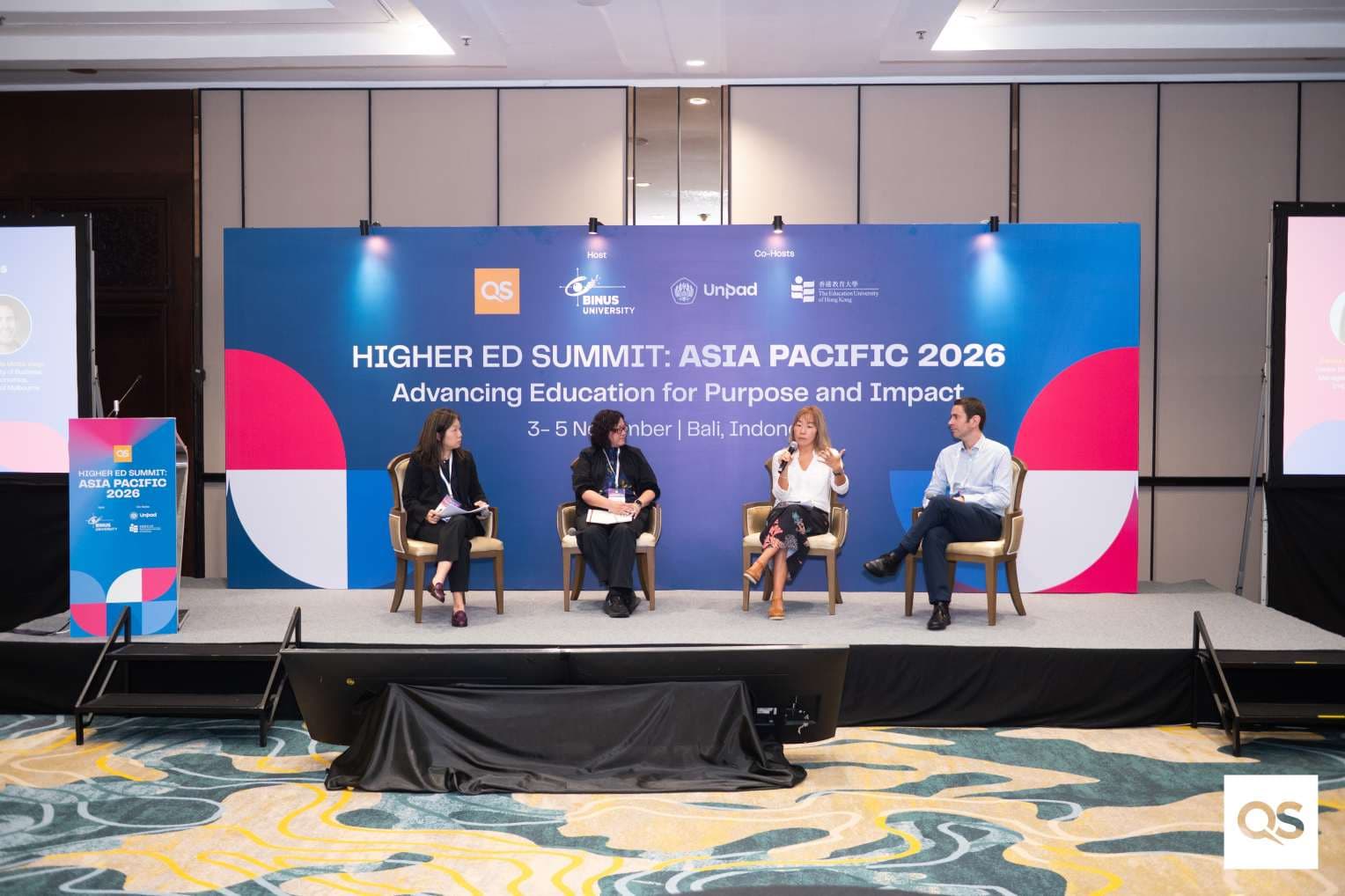
Ara Yoo, professor of the Practice in Tech for Good at UPF Barcelona School of Management (UPF-BSM), took part in the QS Higher Ed Summit: Asia Pacific 2026, one of the leading international gatherings in the higher education sector, held from 3 to 5 November in Bali, Indonesia. Organised by Quacquarelli Symonds (QS), an organisation specialising in higher education, the summit brought together more than 1,000 representatives from universities, businesses and institutions to discuss the future of higher education and its impact on society.
Yoo spoke at the session Leading with AI: Faster Judgement, Better Decisions, which focused on the role of leadership in addressing the challenges posed by artificial intelligence. “AI can help us make decisions faster, but leadership is about making better decisions. Our responsibility as future leaders is not just to adopt technology, but also to question it, understand its impact and ensure that it serves people,” she said.
One of the key themes of her contribution was the importance of preserving human judgement and accountability in decision-making. In this regard, Yoo explained that UPF-BSM is committed to an educational model that encourages students to question technological tools, develop independent thinking and assess their consequences. In areas such as admissions, academic assessment and recruitment, the final decision must therefore remain in human hands rather than being delegated to artificial intelligence systems.
Another key point was the need for clear guidelines to ensure the responsible use of AI. UPF-BSM has developed its own framework, which classifies the uses of this technology into five levels, ranging from permitted applications, such as translation and research, to uses that require specific safeguards, must be approached with particular caution or are strictly prohibited, such as student surveillance or predicting potential fraudulent behaviour. This commitment is also reflected in the school's collaboration with the AI Factory at the Barcelona Supercomputing Center (BSC), which provides free artificial intelligence training for professional leaders. “Clear rules allow us to move faster, not slower,” Yoo emphasised.
Her contribution also highlighted the importance of harnessing technological innovation to address specific social challenges. One example of this commitment is UPF-BSM's STOP project, which combines data analysis, artificial intelligence and marketing to help prevent suicide. As part of this initiative, students develop models to identify people at risk and design campaigns that connect them with support resources, such as helplines and suicide prevention services. “Technology does not replace human care; it helps extend its reach to more people,” Yoo said.